
Understanding ADHD: Symptoms, Everyday Challenges and Living Better
ADHD can affect attention, organisation, emotional wellbeing and everyday routines. Understanding the condition is an important step towards building a more supportive, confident and fulfilling daily life.
In this article
- Living Better with ADHD
- What Is ADHD?
- Recognising the Symptoms
- Difficulties with attention
- Hyperactivity and impulsivity
- Why Does ADHD Develop?
- How Is ADHD Diagnosed?
- Living Better: Practical Everyday Strategies
- Create predictable routines
- Break large tasks into smaller steps
- Make the environment work for you
- Protect sleep
- Include regular physical activity
- Support emotional wellbeing
- Nutrition and ADHD
- Understanding the Homeopathic Perspective
- Explore Related Bahola Products
- Bahola ADHD Care
- Frequently Asked Questions
- References and Further Reading
Living Better with ADHD
Imagine sitting down to complete an important task, only to find your attention moving from one thought to another. Or struggling to organise the day's activities, even when you know exactly what needs to be done.
For people living with Attention-Deficit/Hyperactivity Disorder (ADHD), these experiences can be frequent and frustrating.
ADHD can influence learning, work, relationships and everyday responsibilities. Yet with appropriate assessment, practical strategies and ongoing support, people with ADHD can develop ways to manage challenges and make the most of their strengths.
The goal is not simply to reduce symptoms. It is to improve quality of life—feeling more organised, participating confidently in daily activities, maintaining relationships and enjoying a greater sense of control.
What Is ADHD?
ADHD is a neurodevelopmental condition characterised by persistent patterns of inattention, hyperactivity and/or impulsivity that interfere with functioning or development.
Although ADHD is often identified during childhood, it can continue through adolescence and adulthood.
Healthcare professionals generally recognise three presentations:
Predominantly inattentive presentation: Difficulty sustaining attention, organising tasks, following instructions or remembering everyday responsibilities.
Predominantly hyperactive-impulsive presentation: Restlessness, excessive activity or talking, difficulty waiting and acting before considering consequences.
Combined presentation: A combination of significant inattentive and hyperactive-impulsive symptoms.
The way ADHD presents can change with age, circumstances and the demands of daily life.
Recognising the Symptoms
Difficulties with attention
Common experiences may include:
- Becoming distracted during tasks or conversations.
- Frequently misplacing essential belongings.
- Struggling to organise activities and deadlines.
- Forgetting appointments or routine responsibilities.
- Finding sustained mental effort particularly challenging.
- Making avoidable mistakes despite understanding the task.
Hyperactivity and impulsivity
Some individuals experience:
- Frequent fidgeting or restlessness.
- Difficulty remaining seated when expected.
- Excessive talking or interrupting conversations.
- Acting without fully considering consequences.
- Difficulty waiting for their turn.
- Feeling internally restless, particularly during adulthood.
Not everyone with ADHD experiences all these symptoms. Occasional distraction or restlessness alone does not establish an ADHD diagnosis.
Why Does ADHD Develop?
ADHD does not have one single known cause.
Research indicates that genetics and differences in neurodevelopment contribute substantially to the condition. Certain environmental and early-life factors may also influence risk.
ADHD is not simply the result of poor discipline, inadequate parenting or a lack of effort.
A proper assessment considers the individual's developmental history, symptoms, functional difficulties and other possible explanations.
How Is ADHD Diagnosed?
ADHD is diagnosed through a comprehensive clinical evaluation, not through a single blood test or questionnaire.
Depending on the individual's age and circumstances, assessment may include:
- A detailed medical and developmental history.
- Discussion of symptoms and their effects on daily functioning.
- Information from parents, teachers, partners or other relevant observers.
- Standardised symptom-rating scales.
- Evaluation for other conditions that may produce similar difficulties.
A qualified healthcare professional can determine whether the symptoms meet recognised diagnostic criteria and recommend appropriate management.
Living Better: Practical Everyday Strategies
Support for ADHD should address the areas of life that matter most to the individual.
Create predictable routines
Regular times for waking, meals, work, study and sleep can reduce the mental effort required to organise each day.
Visual schedules, calendars and reminders may make responsibilities easier to manage.
Break large tasks into smaller steps
An overwhelming project becomes more manageable when divided into short, clearly defined actions.
Using a timer, written checklist or scheduled break can help some individuals sustain progress.
Make the environment work for you
Reducing unnecessary distractions, organising frequently used objects and creating dedicated workspaces may improve everyday functioning.
Protect sleep
Poor sleep can worsen concentration, emotional regulation and daytime functioning.
A consistent bedtime, suitable sleeping environment and reduced late-night stimulation can support healthier sleep habits.
Include regular physical activity
Age-appropriate physical activity can contribute to general wellbeing, sleep quality and mood.
The best routine is one that is enjoyable and sustainable.
Support emotional wellbeing
ADHD can affect self-esteem, relationships and confidence. Supportive communication, realistic expectations and professional psychological support can be valuable.
A useful quality-of-life question: Which everyday activity would you most like to make easier—completing work, managing time, maintaining relationships or feeling calmer during transitions?
Nutrition and ADHD
A balanced diet supports general health, energy and development.
Meals containing adequate protein, whole grains, fruits, vegetables and healthy fats can form part of a healthy routine.
Where nutritional deficiencies, food sensitivities or significant dietary concerns are suspected, advice should be individualised with a qualified healthcare professional.
Understanding the Homeopathic Perspective
In homeopathic materia medica, remedy selection traditionally considers the individual's broader symptom picture, including behaviour, emotional responses, sleep and accompanying physical symptoms.
The original Bahola article discusses five remedies in this context:
Stramonium: Traditionally associated with marked fearfulness, agitation and sudden behavioural outbursts.
Hyoscyamus: Described in classical materia medica in relation to restlessness, impulsive behaviour and emotional reactivity.
Tarentula hispana: Traditionally associated with pronounced restlessness, rapid activity and difficulty remaining still.
Veratrum album: Described in relation to certain patterns of agitation and intense behavioural or emotional expressions.
Tuberculinum: Traditionally discussed in connection with restlessness, dissatisfaction and a desire for change.
People receiving ADHD care should not discontinue prescribed medication, behavioural interventions or other recommended treatment in favour of homeopathy.
Explore Related Bahola Products
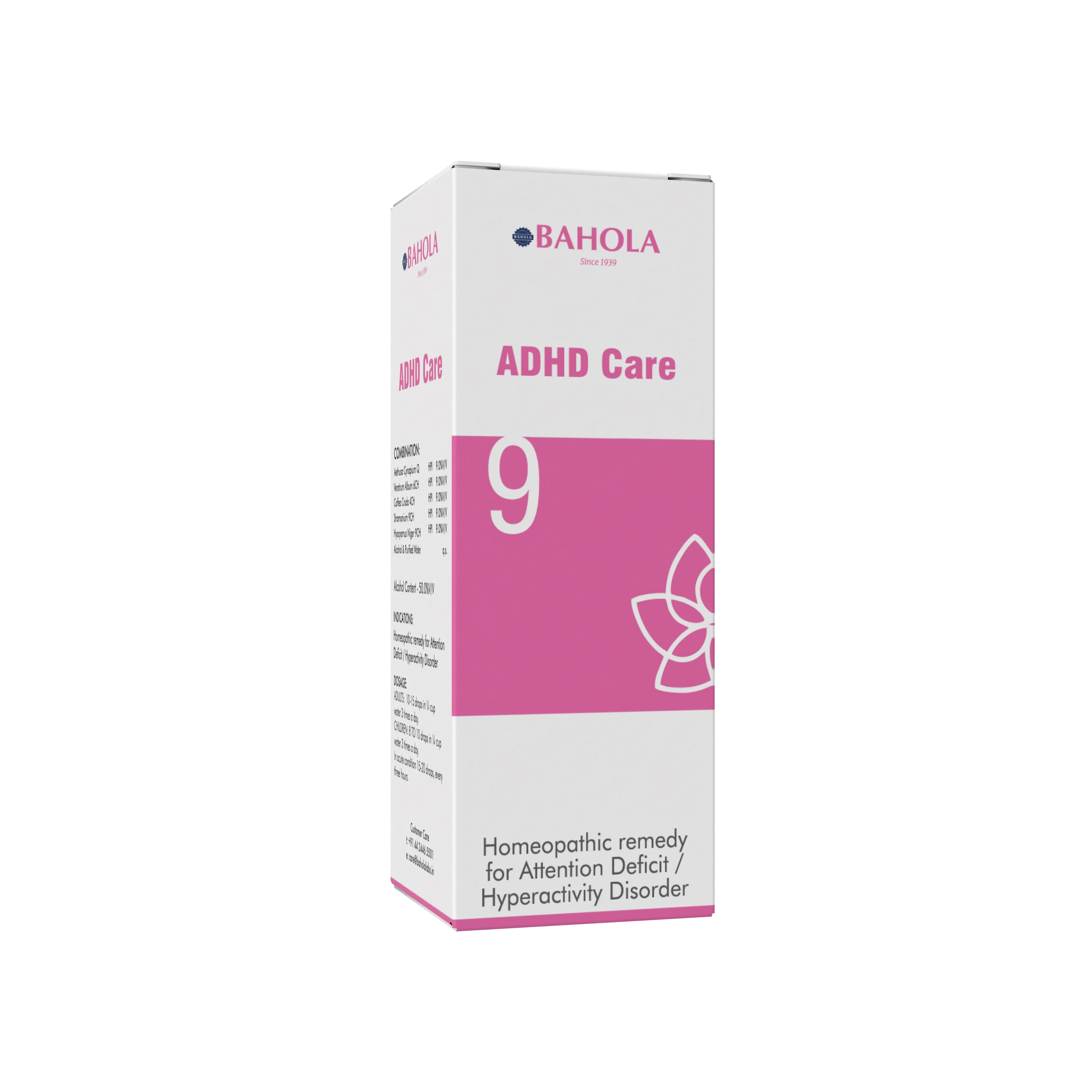
Bahola ADHD Care
Bahola ADHD Care is a homeopathic specialty product associated with this subject in the original Bahola Health Conditions article.
This section will contain the product's verified formulation, potencies, approved label indications and dosage, followed by a link to its current product page.
Product details pending label verification. No treatment-effectiveness claims are approved in this draft.
Frequently Asked Questions
1. Is ADHD only a childhood condition?
No. ADHD commonly begins in childhood, but symptoms can continue into adulthood. The way symptoms appear may change over time.
2. Can someone have ADHD without being visibly hyperactive?
Yes. People with predominantly inattentive ADHD may experience significant difficulties with concentration, organisation and memory without obvious physical hyperactivity.
3. Does ADHD affect intelligence?
ADHD does not determine intelligence. People with ADHD have a wide range of intellectual abilities, interests and strengths.
4. Can lifestyle changes help people with ADHD?
Structured routines, adequate sleep, physical activity and practical organisational strategies may support everyday functioning. They work best as part of an individualised management plan.
5. Can diet cure ADHD?
No specific diet has been established as a cure for ADHD. Good nutrition supports overall health, while any dietary intervention should be considered in the context of individual needs.
6. When should someone seek professional advice?
Assessment is appropriate when persistent difficulties with attention, impulsivity or activity levels interfere with education, work, relationships or daily responsibilities.
7. Can homeopathy replace ADHD medication or behavioural therapy?
No. Homeopathic approaches should not replace evidence-based ADHD care. Any complementary treatment should be discussed with the treating healthcare professional.
References and Further Reading
- American Psychiatric Association — ADHD patient and family information.
- National Institute of Mental Health — Attention-Deficit/Hyperactivity Disorder.
- Centers for Disease Control and Prevention — ADHD symptoms, diagnosis and management.
- Relevant clinical guidance on ADHD assessment and management.
Reference links, editions and access dates to be verified during editorial review.
Live Better, Every Day.
Understanding ADHD is the beginning of building practical support, healthier routines and greater confidence in everyday life.
This article is for educational purposes and is not a substitute for professional medical advice, diagnosis or treatment.
This article is for general information and education. It is not a substitute for advice from a qualified healthcare professional.
Explore Related Bahola Products
Product selection should be guided by a qualified practitioner where appropriate.